My mom's cranberry horseradish sauce is sweet and tart and sharp all at the same time, and the sharp part is why it works. Fresh cranberries cook down with sugar and brown sugar until they pop. Then the pan has to cool all the way down before any horseradish goes in. That order matters more than anything else here, and I'll get into why in a minute.
I never would have put these two things together. But it's been on my mom's holiday table for as long as I can remember, and it's the first thing I think of when I think about Thanksgiving and Christmas at my parents' house. It's very good with prime rib. It makes turkey interesting. It's better on day two.


What it tastes like
Sweet first. There's a full cup of sugar in here plus brown sugar, so it lands where cranberry sauce is supposed to land. Bright, a little jammy, tart around the edges.
Then the horseradish shows up. It isn't spicy the way a chili is spicy. It goes up instead of down, into your sinuses, and then it's gone again a second later. It also cuts right through fat, which is why it's so good next to a rib roast.
With turkey it does what cranberry sauce is supposed to do, except it has an opinion.
If you've always found cranberry sauce a little boring, some sweet red thing you spoon onto the plate because it's tradition, this is the version that fixes that.
The step that actually matters
My mom's instructions end like this: cook the cranberries, let them cool, then add the horseradish.
I assumed for years that she was just being unhurried about it. She wasn't. That cooling step is the recipe.
Horseradish has no heat at all until you grate it. Grating breaks open the cell walls, an enzyme goes to work on a compound inside, and the result is the stuff that makes your eyes water. This is why a whole horseradish root sitting on the counter smells like nothing, and why grating one is an event.
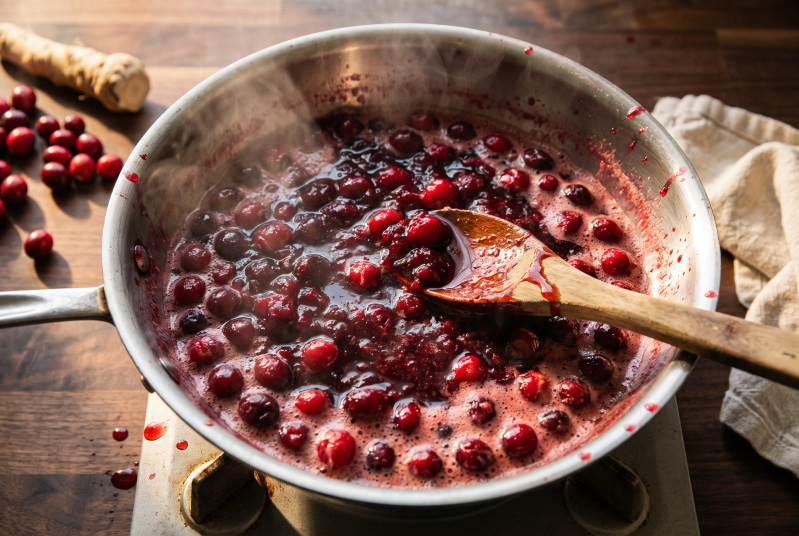
The part that matters for cooking is that the enzyme gets destroyed somewhere above 160°F, and the pungent compound it produces is volatile, so heat just carries it off. Stir horseradish into a hot pan of cranberries and you've made cranberry sauce. Perfectly nice cranberry sauce. You've also wasted the horseradish completely, because none of the heat will survive.
Let the pot cool first and the bite stays. My mom has been doing this correctly on instinct for about forty years.
Recipe
Prep 5 minutes. Cook 12 minutes. Cool 1 hour. About 1 hour 20 minutes total. Makes about 2 cups.
Ingredients
-
12 oz fresh or frozen cranberries (one standard bag)
-
1/4 to 1/2 cup water
-
1 cup granulated sugar
-
1/4 cup packed brown sugar
-
1/4 cup prepared or freshly grated horseradish
-
Salt and black pepper to taste


Directions
-
Rinse the cranberries if you're using fresh, and pull out any soft ones. Frozen go in straight from the bag, no thawing.
-
Put the cranberries, water, granulated sugar, and brown sugar in a medium saucepan over medium heat.
-
Cook for about 10 to 12 minutes, stirring now and then, until the cranberries burst and the sauce thickens. You'll hear them pop. Start with 1/4 cup of water and only add more if it looks like it's sticking.
-
Take the pan off the heat and let it cool all the way down, at least an hour. Don't rush this.
-
Stir in the 1/4 cup of horseradish. Add salt and pepper. Let it sit for 10 minutes, then taste it and add a little more horseradish if you want it sharper.
-
Refrigerate for at least 2 hours before serving. It's better the next day.
Notes
Let it cool all the way. Warm sauce kills the horseradish. It's the one step you can't cheat.
About the horseradish. A quarter cup is my mom's amount and it sits nicely against all that sugar. You taste it, it's clearly there, but it doesn't run the show. If you want something that can hold its own next to a rib roast with no help, add more a tablespoon at a time.
Fresh or jarred. Jarred prepared horseradish is grated root that's already been stabilized in vinegar, so it behaves the same way every time. Drain it before you measure or your sauce will go watery. Fresh grated is hotter and brighter, but it fades quickly, because that volatile compound starts evaporating within about fifteen minutes. If you're grating your own, grate it, give it three or four minutes to come up to full strength, then stir in a teaspoon of vinegar or lemon juice to hold it there before it goes into the cranberries.
Make it early. Two or three days ahead is ideal. The heat settles into the sweetness instead of sitting on top of it. It keeps about ten days covered in the fridge, which makes it a nice thing to get off your list before the week gets away from you.
It thickens in the fridge. If it looks loose in the pan, that's normal. The pectin sorts it out as it chills.
Minced onion. Some versions of this add a couple of tablespoons of finely minced onion, which pushes the whole thing toward savory relish. My mom's doesn't have it. It's a real variation if you want it sharper still.
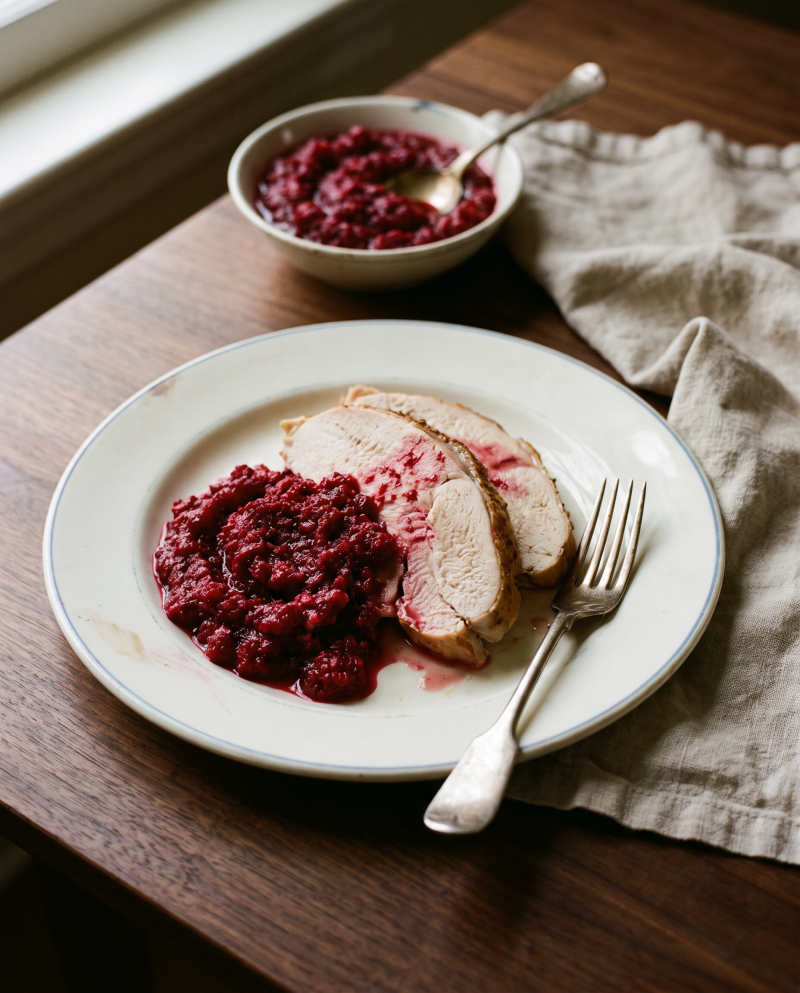

What to serve it with
-
Prime rib or a standing rib roast. This is the pairing that wins people over. It cuts the fat like a horseradish cream would, with fruit underneath it.
-
Turkey, obviously.
-
Baked ham, where sweet and hot together already belongs.
-
Brisket, especially a holiday brisket.
-
The next day turkey sandwich, which might be the best thing you do with it. Spread it on thick.
-
Poured over a block of cream cheese with crackers. Ten seconds of work and it's gone in five minutes.
This one is my mom's. If you make it, I promise you won't regret it.