This is the bowl I make in the two months a year when delicata squash exists, and then think about wistfully for the other ten.
It is also, conveniently, the laziest squash there is. You do not peel delicata. The skin is thin enough to eat and it goes tender and slightly chewy in the oven, which means the entire prep is slice, scoop the seeds, done. No wrestling a butternut into submission with a knife that is not sharp enough.
Then there is the halloumi, which is the actual reason this bowl exists. Sliced thick and seared in a hot pan, it turns golden and crisp on the outside while staying squeaky and soft in the middle, and it does not melt into a puddle the way any sensible cheese would. Add hot honey over the top and you get sweet, salty, and spicy in one bite. It makes four generous bowls, or lunch for one person for four days.


Why this bowl works
Three things carry it, and two of them happen in the last five minutes.
The halloumi has to go in last, and go in hot. Seared halloumi is glorious for about ten minutes and then it firms up and loses the crisp edge. It cooks in roughly two minutes a side, so it is the final step, not the first one.
Sweet, salty, spicy, all at once. Halloumi is a genuinely salty cheese. Delicata roasts sweet and almost caramelized. The hot honey bridges them and adds heat. Pull any one of the three and the bowl goes flat.
Something raw and sharp underneath. Arugula, quick-pickled red onion, and pomegranate seeds keep the whole thing from reading as heavy. Warm cheese and roasted squash need acid the way roast chicken needs lemon.
Ingredients
For the bowl
-
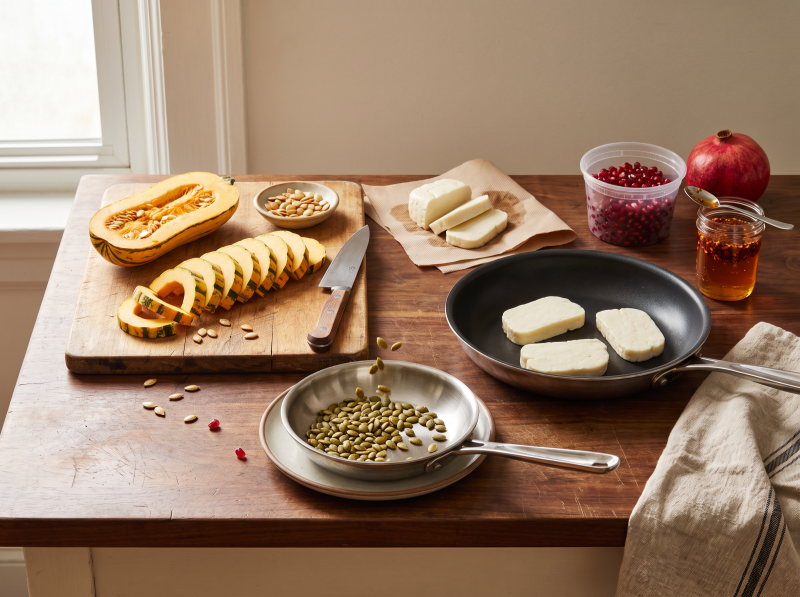
2 delicata squash, about 2 lb total, halved lengthwise, seeded, and sliced into 1/2 inch half moons, skin on
-
2 blocks halloumi, 8 oz each, sliced 1/2 inch thick
-
1 cup farro or pearl couscous, uncooked
-
3 tbsp olive oil, divided, plus 2 tbsp for searing
-
5 oz baby arugula, about 8 cups
-
1/2 small red onion, very thinly sliced
-
2 tbsp red wine vinegar
-
1/2 cup pomegranate seeds
-
1/2 cup pepitas, toasted
-
1/4 cup fresh mint or flat-leaf parsley leaves, torn
-
1/2 tsp kosher salt
-
Black pepper


For the hot honey
-
1/3 cup honey
-
1 tsp red pepper flakes, or more if you mean it
-
1 tsp apple cider vinegar
-
Pinch of kosher salt
For the lemon dressing
-
3 tbsp olive oil
-
1 tbsp lemon juice
-
1/2 tsp Dijon mustard
-
1/4 tsp kosher salt
Directions
Quick-pickle the onion first. Toss the sliced red onion with the red wine vinegar and a pinch of salt in a small bowl and leave it alone on the counter. By the time everything else is ready it will be pink, softened, and much less aggressive. This takes 20 minutes and costs you nothing.
Cook the farro. Simmer it in well-salted water according to the package directions, usually 25 to 30 minutes, until chewy but not soft. Drain and spread on a plate to cool slightly. This can be done up to 4 days ahead.
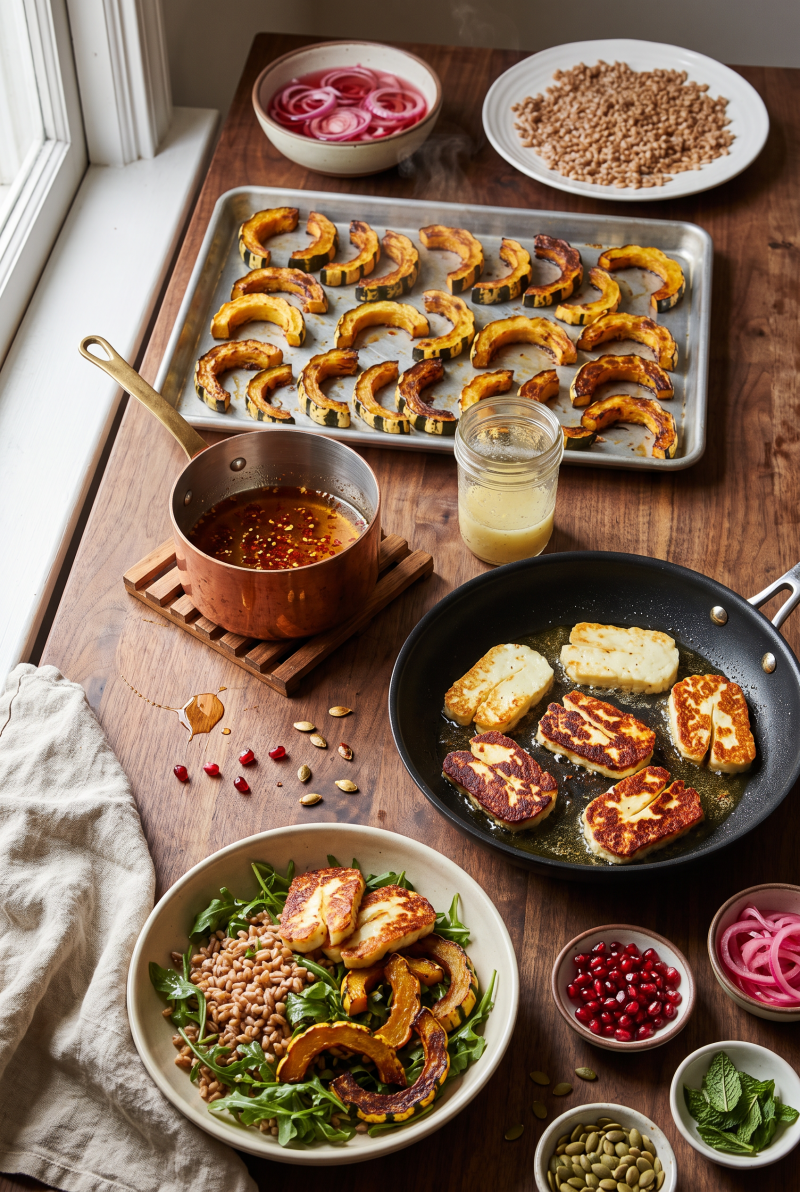
Roast the squash. Heat the oven to 400F. Toss the half moons with 2 tbsp olive oil, the salt, and plenty of black pepper, and spread them on a sheet pan in a single layer without crowding. Roast 20 minutes, flip, then roast another 10 to 15 minutes until the flesh is tender and the edges are burnished and golden brown.
Make the hot honey. Warm the honey and red pepper flakes in a small saucepan over medium-low, stirring, just until it begins to simmer. Do not let it boil. Pull it off the heat, stir in the apple cider vinegar and a pinch of salt, and leave the flakes in. It thickens as it cools and keeps at room temperature in a jar for weeks.
Shake the dressing. Combine the olive oil, lemon juice, Dijon, and salt in a jar and shake until it comes together.
Sear the halloumi last. Pat the slices dry. Heat 2 tbsp olive oil in a nonstick or well-seasoned skillet over medium-high until it shimmers, then lay the slices in a single layer without crowding. It will splutter. Cook 1 to 2 minutes per side, until each side has a deep golden crust, and move them straight to the bowls. Do not walk away — halloumi goes from pale to burnt fast.
Build the bowls. Divide the arugula among four bowls and dress it lightly with the lemon dressing. Add the farro, then the warm roasted squash, then the halloumi on top while it is still hot. Finish with the pickled onion, pomegranate seeds, toasted pepitas, and torn mint, then drizzle the hot honey over everything, aiming for the cheese. Eat immediately.
Notes worth having before you start
-
Do not peel the squash. The skin is thin, entirely edible, and the whole reason delicata is worth buying over butternut.
-
Cut the squash into even 1/2 inch half moons. Thin pieces burn while thick ones stay raw, and this is the one place precision pays off.
-
Pat the halloumi dry before it hits the pan. Surface moisture steams instead of browning, and steamed halloumi is rubbery.
-
Do not crowd the halloumi. Two batches is better than one sad crowded pan.
-
Toast the pepitas in a dry skillet for two minutes, shaking constantly, and pour them out immediately.
-
Buy pomegranate seeds already removed if your store sells them. Seeding a pomegranate is a twenty-minute commitment and a stained shirt.
-
Taste the hot honey before you drizzle. Different brands of red pepper flakes vary wildly in heat.
Meal prep for four days
Everything here holds except the halloumi, which needs to be seared the day you eat it.
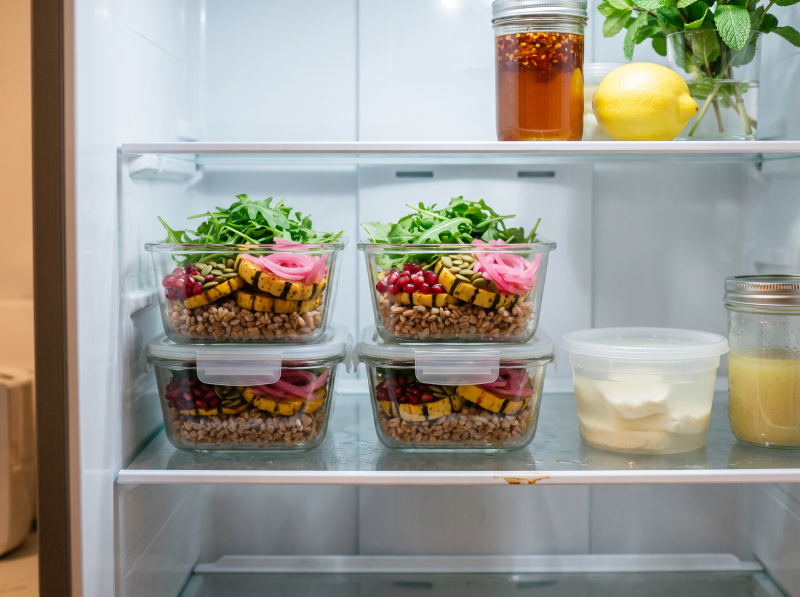
Portion the farro, roasted squash, arugula, pickled onion, pomegranate seeds, and pepitas into four containers, keeping the greens on top so they do not compress. Store the halloumi uncooked in the fridge, still in its brine if you have it, and sear two or three slices in a hot pan for four minutes total right before eating. It is genuinely worth the four minutes.
Keep the hot honey and the lemon dressing in separate jars. The hot honey lives at room temperature and lasts weeks. The dressing keeps 5 days in the fridge and will need a shake.
If you want it fully assembled and no-cook, sear all the halloumi up front and eat it cold. Cold halloumi is firm and salty rather than crisp — good, but a different bowl.
Questions that came up
What if I cannot find delicata squash? Butternut works, cut into 3/4 inch cubes and roasted at 425F for about 30 minutes, but you will have to peel it. Acorn squash also works and is less sweet.
Is the skin really edible? Yes. Delicata skin is thin and softens completely in the oven. Peeling it is wasted effort and you lose the texture that holds the slices together.
Why is my halloumi not crisping? Usually the pan was not hot enough, the slices were wet, or the pan was crowded. Dry cheese, hot oil, single layer, and leave it alone until the underside is properly golden.
Can I grill the halloumi instead? Yes, and it is excellent. Brush the slices with oil and grill 2 minutes per side over medium-high on a clean, well-oiled grate.
Is this filling without meat? Yes, surprisingly so. Halloumi is dense and protein-heavy, and farro is chewy and substantial. If you want meat anyway, sliced roast chicken slides right in.
Can I use store-bought hot honey? Of course. But homemade takes three minutes, costs a fraction of the bottled stuff, and lets you control the heat.
How spicy is it? As written, gentle warmth. One teaspoon of red pepper flakes in a third of a cup of honey reads as sweet first, heat second. Double it if you want the heat to announce itself.
Can I make it vegan? Not with halloumi, no. Swap in cubes of extra-firm tofu pressed and seared until golden, use a firm plant-based feta, and replace the honey with maple syrup plus the same chili flakes.