There is a specific kind of despair that arrives when you are halfway into a recipe, reach into the cabinet, and find no pumpkin pie spice. Or worse, find a jar that has been in there since a previous administration.
Here is the good news. Pumpkin pie spice is not a product. It is a ratio. If you own cinnamon, ginger, nutmeg, allspice, and cloves, and you almost certainly own at least four of those five, you already have it. Two minutes of measuring, one jar, and you never buy the little overpriced tin again.
This makes about 1/4 cup, which is enough for several batches of anything, and it costs a fraction of what the pre-mixed version does.

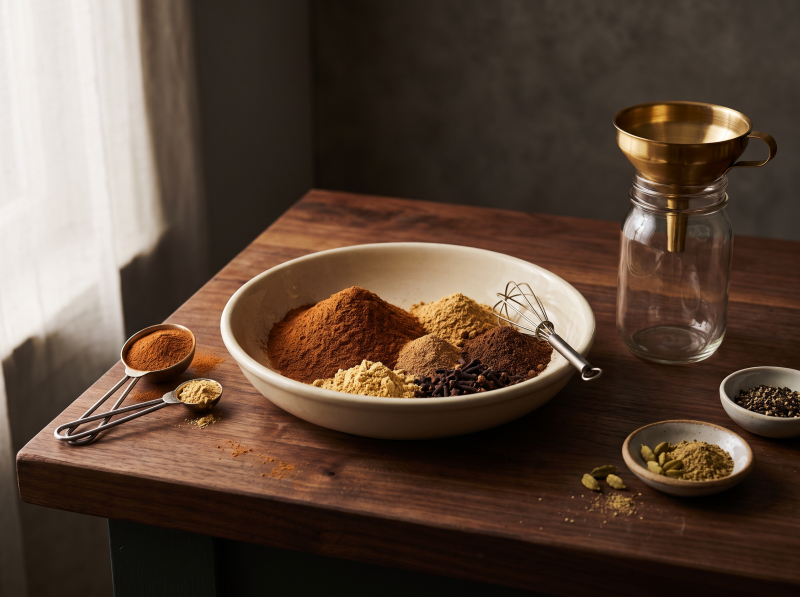
The ratio
Everything hangs on one rule: it is cinnamon-forward, and everything else is a supporting cast.
-
3 tbsp ground cinnamon
-
2 tsp ground ginger
-
2 tsp ground nutmeg
-
1 1/2 tsp ground allspice
-
1 1/2 tsp ground cloves
Whisk it in a small bowl and funnel it into a clean, dry jar with a tight lid. That is the whole recipe.
Two optional additions, both of which I use. A small pinch of ground black pepper, less than an eighth of a teaspoon, which sharpens the whole thing and is a trick borrowed from chai. And 1 teaspoon of ground cardamom if you like your fall spice slightly floral and less sweet.
What to do if you are missing something
Do not go to the store. Adjust.
-
No allspice. Skip it and add another 1/2 tsp cinnamon plus a pinch more cloves. Allspice tastes roughly like cinnamon, nutmeg, and cloves anyway, which is the joke.
-
No cloves. Halve the allspice increase and go on with your life. Cloves are the loudest spice in the blend, so their absence is forgiving.
-
No ginger. This one matters more, because ginger is the spice that makes pumpkin pie spice taste like pumpkin pie spice rather than just cinnamon. If you are out, your blend is closer to apple pie spice, which is fine but different.
-
Only cinnamon. For one teaspoon of pumpkin pie spice in a pinch, use 3/4 tsp cinnamon plus 1/4 tsp of whatever else you have on hand from the list. It is not identical, but nobody at the table will file a complaint.
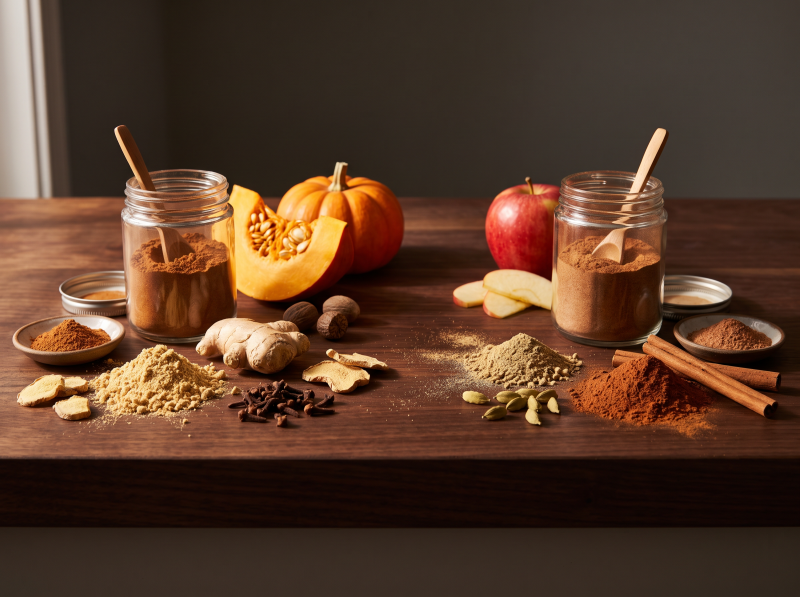
Pumpkin pie spice versus apple pie spice
They overlap heavily and you can substitute one for the other in most recipes, one for one.
The difference is ginger and cardamom. Pumpkin pie spice carries a real dose of ground ginger, which gives it heat and bite. Apple pie spice leans harder on cinnamon and often includes cardamom instead, which reads sweeter and softer.
Practically speaking: if you swap apple pie spice into a pumpkin recipe, it will taste a touch milder and more cinnamon-heavy. If you swap pumpkin pie spice into an apple recipe, it will taste spicier and slightly sharper. Both are good. Neither is a disaster.
How long it actually lasts
Ground spices technically keep for two to four years, and spice blends fall in the same range. But technically is doing a lot of work in that sentence.
Potency is the real issue, not safety. Old spices do not make you sick, they just stop tasting like anything. Ground spices are at their best within six months to a year, and after that they fade steadily. If you open the jar and it smells like dust rather than cinnamon, it has nothing left to give a recipe.
Store the jar somewhere cool, dark, and dry. Not the cabinet directly above the stove, which is where everyone keeps spices and is the worst possible place for them. Heat and light are what kill them.
Because this recipe makes a small batch, you can mix it fresh each fall rather than storing a jar for three years, which is the entire advantage of making it yourself.


What to use it in
Beyond pie, which is the obvious one:
-
Whisked into oatmeal, yogurt, or overnight oats
-
Stirred into coffee grounds before brewing, about 1/2 tsp per pot
-
Sprinkled over roasted sweet potatoes or winter squash with a little maple
-
In whipped cream, about 1/4 tsp per cup of cream
-
In pancake or waffle batter, 1 tsp per batch
-
Rimmed on a glass with sugar for a fall cocktail
-
Warmed into apple cider on the stove
A general rule for baking: 1 1/2 to 2 teaspoons per standard loaf, muffin batch, or pie filling.
Questions that came up
Is this cheaper than buying it? Considerably, assuming you own the individual spices. A small tin of pre-mixed pumpkin pie spice costs about the same as a full jar of cinnamon, and you get a fraction of the volume.
Can I scale it up? Yes, and the ratio holds. Think of it in parts, 9 parts cinnamon, 2 parts ginger, 2 parts nutmeg, 1 1/2 parts allspice, 1 1/2 parts cloves, and multiply from there.
Does it need to be whisked, or can I shake it? Shake it in the jar, but shake it well. Ground ginger clumps, and you do not want a pocket of it landing in one muffin.
Fresh nutmeg or pre-ground? Freshly grated nutmeg is noticeably better and takes ten seconds if you have a whole nutmeg and a microplane. Pre-ground is completely acceptable.
Is pumpkin pie spice the same as pumpkin spice? Yes. The names are used interchangeably, and neither contains any pumpkin.
Can I use this in savory cooking? Sparingly, and yes. A small amount works well on roasted squash, carrots, or sweet potatoes, especially with salt and olive oil rather than sugar.
